


Bounded, not accurate
The receipt carries a bound on the error, not just the reading
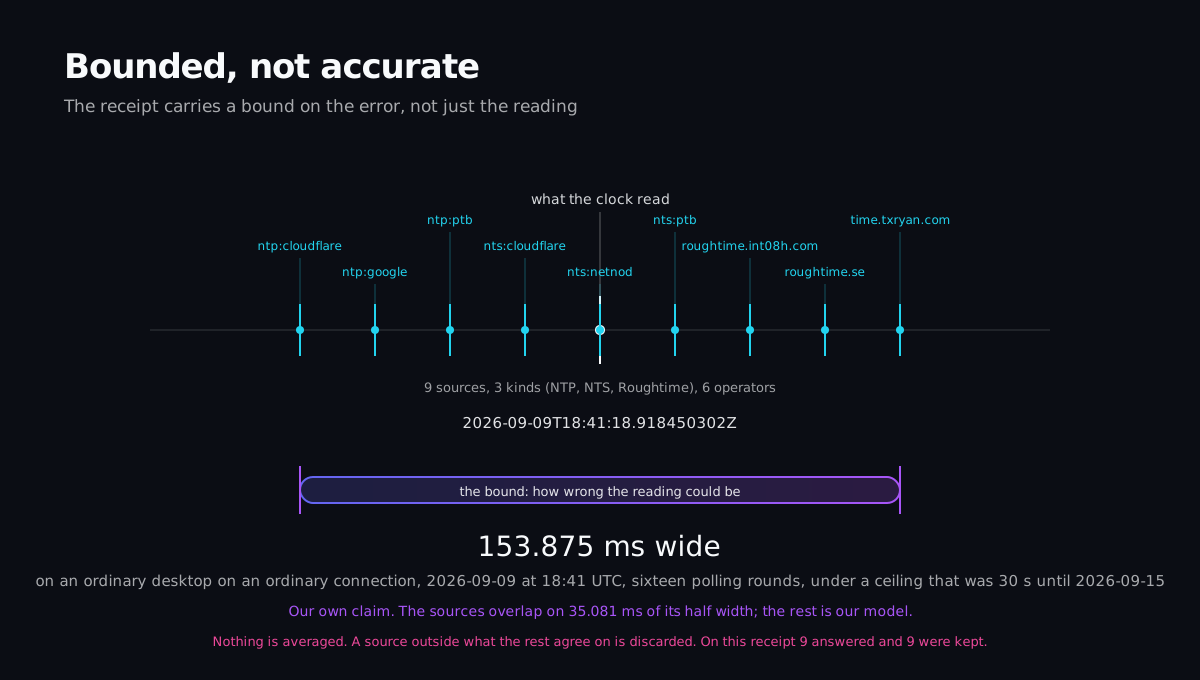

TimeWitness bounds how wrong it could be. The receipt carries the outside signatures that answered. Anyone can check them without trusting you or us, and with no account.
A signed timestamp establishes that a record existed by a time; it does not establish that the event the record describes occurred then.

What the clock read, how wrong our own model says it could be, and signed outside evidence, each part showing one thing about the time.
What the clock read, how wrong our own model says it could be, and signed outside evidence, each part showing one thing about the time.
One receipt, one machine, one moment. Not a figure for yours.
who says soours
| ntp:cloudflare | NTP | cloudflare.com | in the interval |
| ntp:google | NTP | google.com | in the interval |
| ntp:ptb | NTP | ptb.de | in the interval |
| nts:cloudflare | NTS | cloudflare.com | in the interval |
| nts:netnod | NTS | netnod.se | in the interval |
| nts:ptb | NTS | ptb.de | in the interval |
| roughtime.int08h.com | Roughtime | int08h.com | in the interval |
| roughtime.se | Roughtime | netnod.se | in the interval |
| time.txryan.com | Roughtime | txryan.com | in the interval |
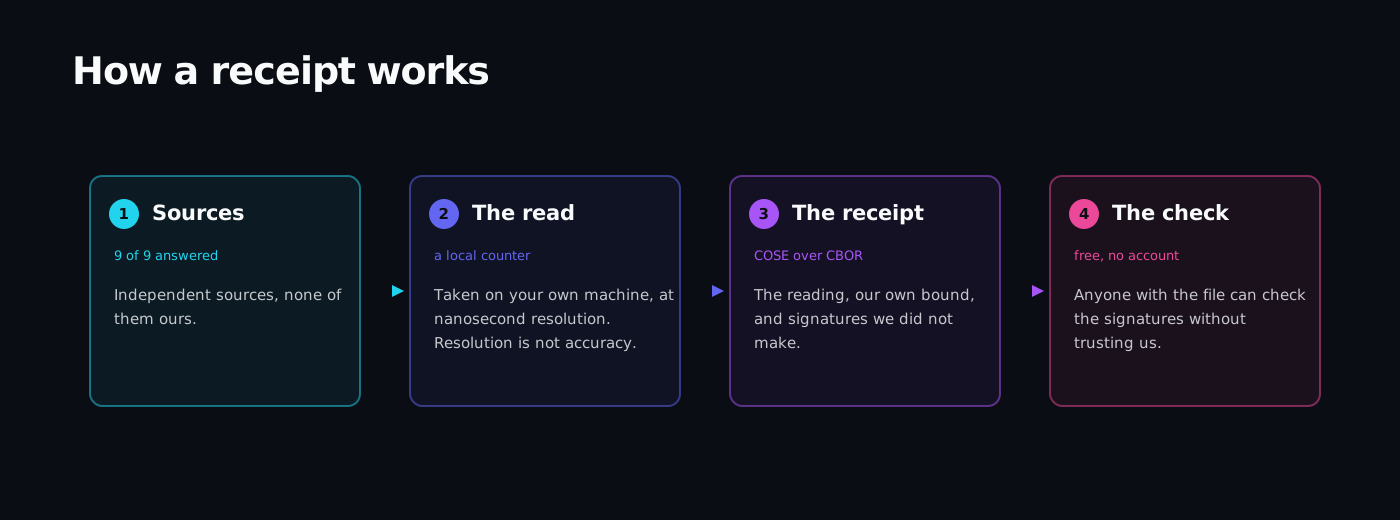
The receipt carries a bound on the error, not just the reading
Free verifier, no account, outside signatures checked without trusting either party
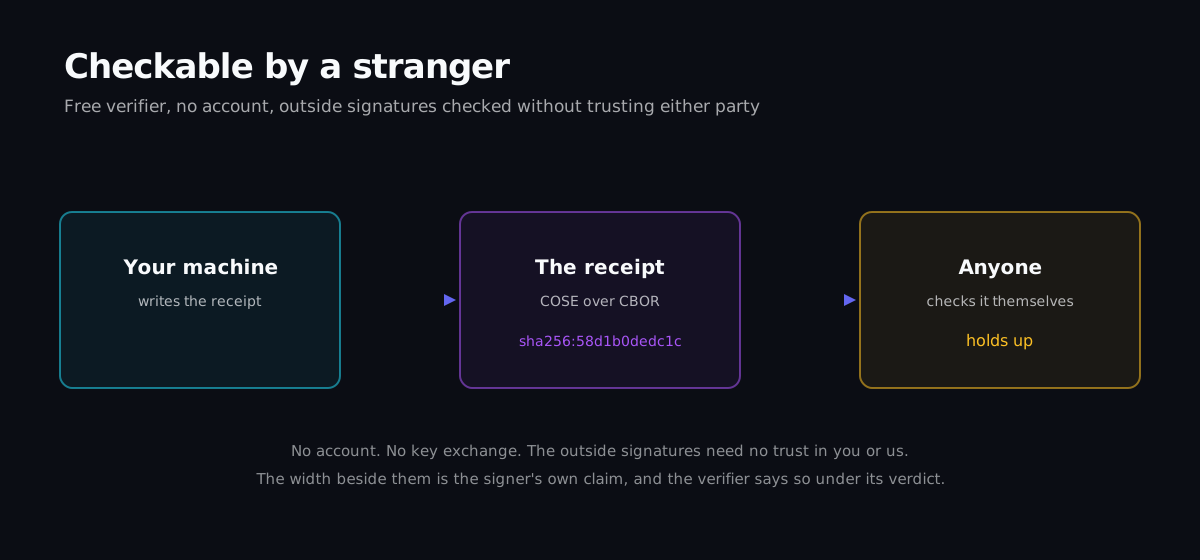
What it cannot prove is published beside what it can
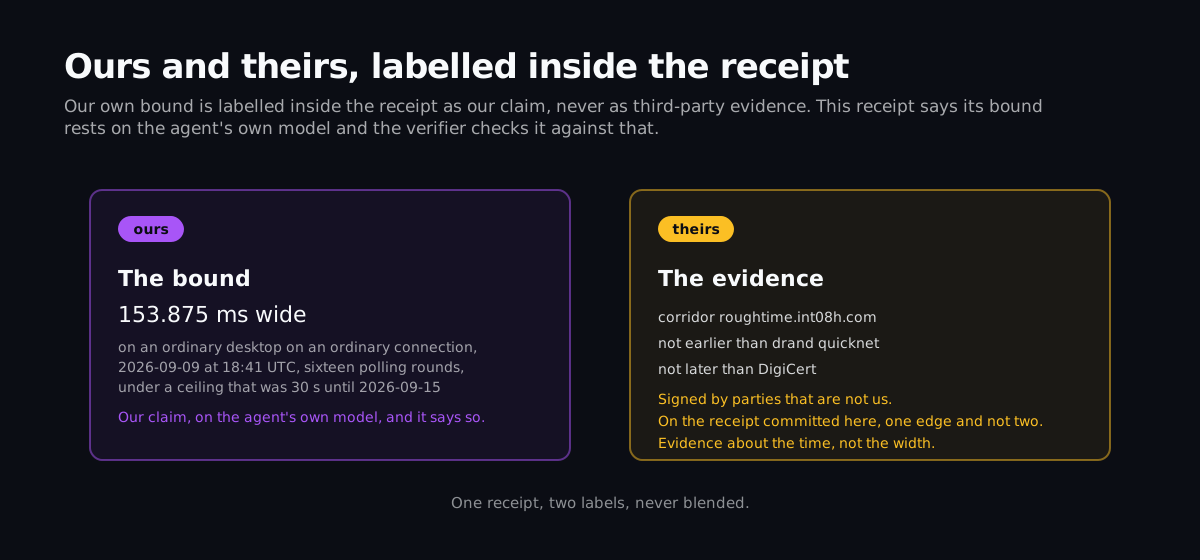
Nobody uses this yet. It is being built in the open.
The time they were built is the one field in them nobody can check. One line in your workflow puts a receipt beside it, with outside signatures anyone can check. Public repositories are free.
- uses: Fountech-ai-Limited/timewitness@v0.8.2This runs today on a GitHub-hosted ubuntu-latest runner, the only runner it has been run on, from a public repository whose current release is v0.8.2. The step builds the command on your runner rather than downloading the Linux binary that release carries, and a key it makes there proves one agent signed the receipt and nothing about who that agent was.

